How Game Development Services Help Studios Build Scalable and High-Performance Games
If you have ever played a mobile game that felt smooth from the first tap, or a multiplayer title that handled thousands of players without lag, you have already experienced what strong game development services look like in action.
Behind those games is usually a team that made the right decisions early. Not just creative decisions, but technical and production ones that made the game easier to scale, update, and maintain.
Game development in 2026 is very different from what it used to be. Players expect real-time multiplayer, cross-platform play, frequent updates, and performance that holds up across a wide range of devices. At the same time, production timelines are tighter and competition is higher than ever.
Studios that try to manage everything in-house often stretch their teams too thin. They end up with a product that works, but struggles to scale or keep players engaged over time.
That is where game development services come in. Not as a replacement for internal teams, but as a way to strengthen the parts of development that have the biggest impact on performance and growth.
What Game Development Services Actually Mean
Game development services can mean different things depending on who you ask, but in practice, they are about solving specific challenges during production.
At P99Soft, we focus on six areas where studios typically need the most support:
Game prototyping
Mobile game development
Art production
Core game development
Engineering
Game design
These areas are closely connected. A decision made in design affects engineering. A limitation in backend systems affects gameplay. Art production timelines impact how quickly content can be shipped.
For example, a multiplayer mobile game needs gameplay systems, backend architecture, and performance optimization to be planned together. If these are handled separately, teams often run into delays, rework, or performance issues later.
Working with a partner that understands how these pieces fit together helps keep development aligned from the start.
Game Prototyping: Validate Before You Invest Heavily
Many games fail because the core idea was never properly tested.
Prototyping is not about building a rough version of the final game. It is about answering important questions early, with minimal time and effort.
Some of the key questions include:
Does the core gameplay loop feel engaging?
Do players understand the mechanics quickly?
Does the visual direction work on actual devices?
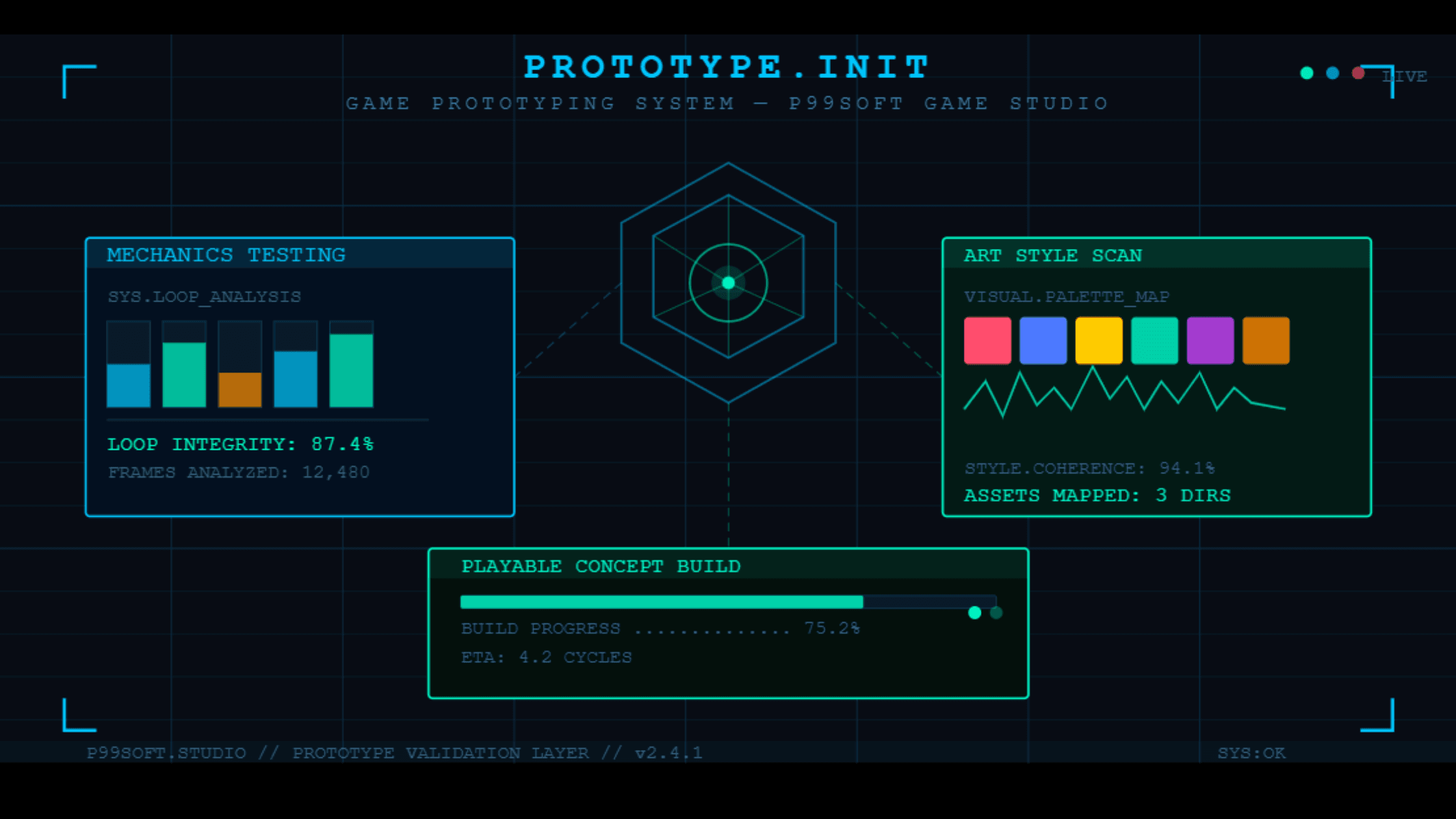
At P99Soft, prototyping is structured around clarity. We build focused prototypes that test specific mechanics or ideas instead of trying to replicate the entire game.
This typically includes:
Mechanics testing to validate gameplay systems
Art exploration to compare visual directions
Playable builds that can be tested with real users
This approach helps teams make decisions based on actual feedback instead of assumptions.
Fixing a design issue during prototyping is far easier than fixing it after months of development. It saves both time and budget, and it reduces the risk of major changes later.
Mobile Game Development: Getting Performance Right from Day One
Mobile gaming continues to dominate in terms of player base, but it also comes with significant technical challenges.
There is a wide range of devices in the market. Different hardware capabilities, operating systems, and network conditions all affect how a game performs.
Players, however, expect a consistent experience.
This is why performance cannot be treated as a final step. It has to be part of development from the beginning.
Our mobile game development services focus on:
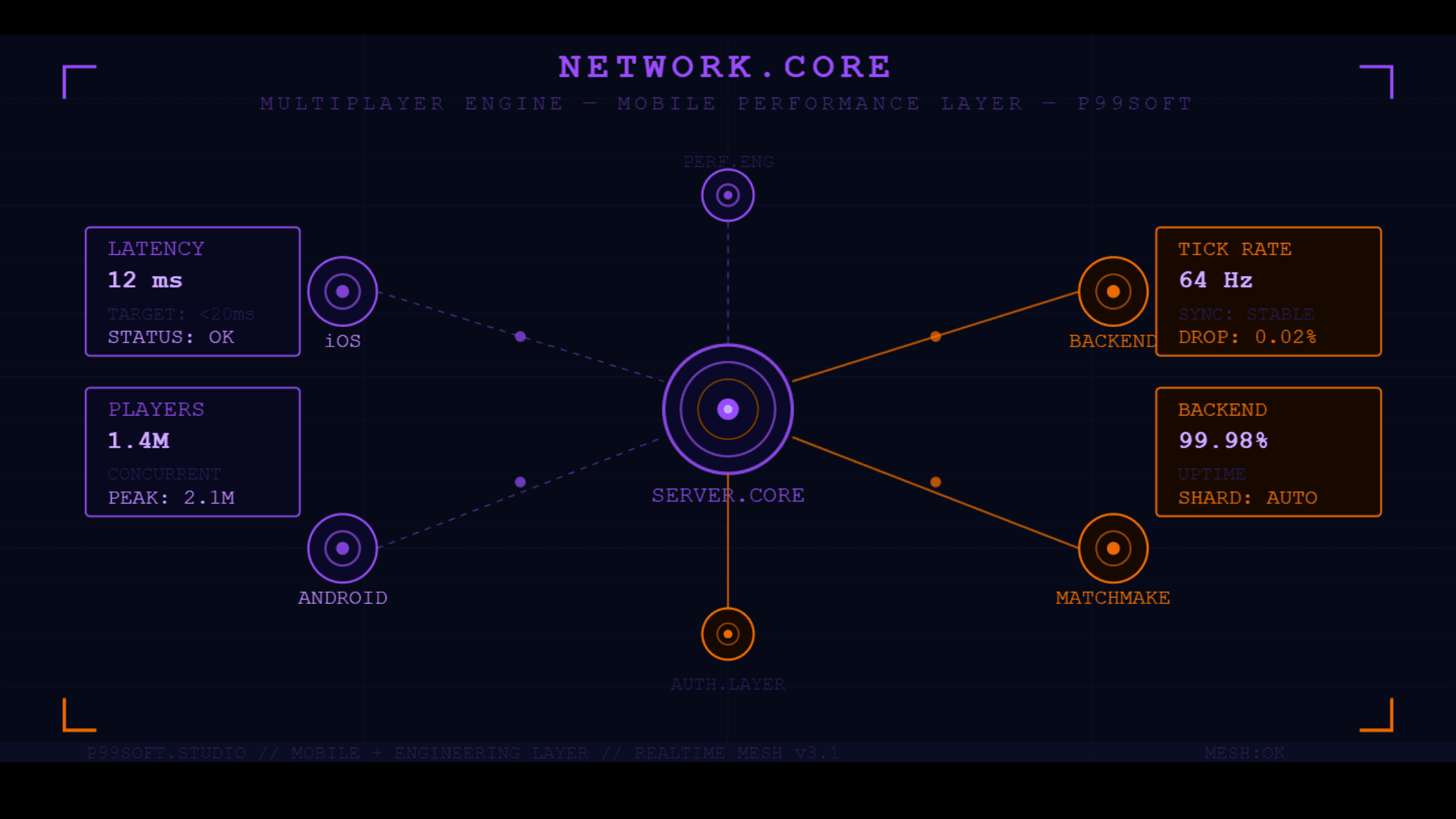
Native and cross-platform development for iOS and Android
Multiplayer system implementation
Continuous performance optimization
One of the biggest challenges in mobile games is multiplayer functionality. Handling latency, syncing player states, and managing unstable connections requires careful planning.
If these systems are not designed properly early on, they become difficult and expensive to fix later.
By integrating performance and networking considerations into the development process, we help studios build games that run smoothly across devices and scale effectively as the player base grows.
Art Production
Art plays a major role in how players perceive a game, but delivering high-quality visuals consistently requires more than just talent.
It requires a structured pipeline.
Each asset goes through multiple stages, including concept design, modeling, texturing, rigging, and integration into the game engine. When multiplied across characters, environments, UI elements, and props, the workload becomes significant.
At P99Soft we focus on making this process efficient and predictable.
Our art production services include:
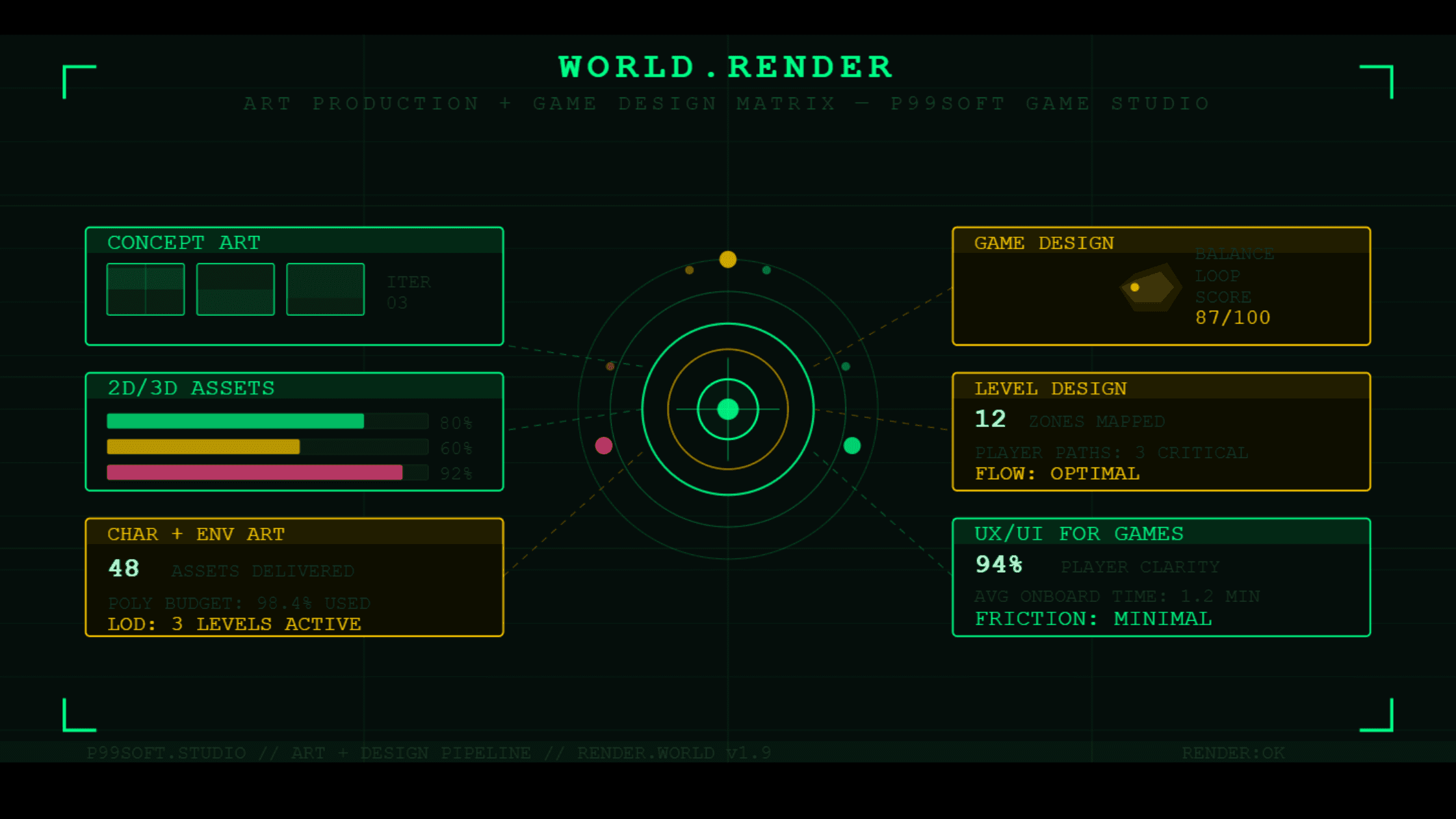
Concept art and visual direction
2D and 3D asset creation
Character and environment design
The key is alignment. Characters need to match environments. UI needs to match the overall visual tone. Assets need to perform well within technical constraints.
By maintaining clear pipelines and quality standards, we help studios reduce revision cycles and move faster without compromising on visual quality.
Core Game Development: Supporting Gameplay and Content Growth
Core game development is where the product takes shape. This includes gameplay systems, progression mechanics, and content structures.
At P99Soft, this area covers:
Gameplay implementation
Platform adaptation and porting
Post-launch content development
Modern games do not end at launch. Many of them continue to evolve through updates, events, and new content releases.
This requires a codebase that supports frequent changes without introducing instability.
We help studios structure their systems so that new content can be added smoothly. This includes designing modular systems, maintaining clean code architecture, and ensuring that updates do not disrupt the existing experience.
For studios expanding into new markets or platforms, adaptation is another key area. This can involve changes in UX, monetization models, or gameplay balancing based on the target audience.
Engineering: Building Systems That Scale with Players
Engineering is one of the most critical parts of modern game development, especially for online and multiplayer experiences.
Players expect fast matchmaking, stable servers, and real-time interactions. Any delay or instability directly affects retention.
Our engineering services focus on:
Backend and server architecture
Multiplayer infrastructure
Performance optimization
The goal is to build systems that can handle growth.
A game may start with a small player base, but if it gains traction, the infrastructure needs to support rapid scaling. This includes managing increased server load, handling concurrent users, and maintaining data consistency.
Designing scalable systems from the beginning helps avoid major rework later. It also ensures that the game can handle peak traffic without performance issues.
Game Design: Experiences That Keep Players Engaged
Game design shapes how players interact with the game over time.
It is not just about mechanics. It is about how those mechanics are introduced, how players progress, and how the overall experience feels.
Our game design services include:
Systems and mechanics design
Level design
UX and UI for games
These elements need to work together.
A strong mechanic will not succeed if players struggle to understand it. A well-designed level can still feel frustrating if the difficulty curve is not balanced.
We focus on creating experiences that are intuitive, engaging, and rewarding over longer sessions.
UX and UI are especially important. In games, players often make decisions quickly, sometimes under pressure. Interfaces need to communicate clearly without interrupting the experience.
Why Studios Choose P99Soft
Studios today are not just building games. They are building products that need to perform, scale, and evolve over time.
What they often need is not a larger team, but the right support in key areas.
At P99Soft, we bring:
Alignment across design, art, and engineering
Experience working on scalable and live game systems
Flexibility to support different stages of development
We do not follow a fixed approach. Instead, we work closely with studios to understand where the challenges are and provide targeted support.
This could be improving performance, setting up backend systems, accelerating content production, or refining gameplay systems.
The goal is always the same. Help studios build games that are stable, scalable, and ready for long-term success.
FAQs
What are game development services?
Game development services are specialized solutions that support different aspects of building a game. This includes design, development, art production, backend engineering, and post-launch support.
Why do studios use game development service providers?
Studios use external partners to improve efficiency, access specialized expertise, and reduce the workload on internal teams. It helps them focus on core creative and strategic areas.
How do game development services improve performance?
They ensure that performance is considered throughout development. This includes optimizing code, managing resources efficiently, and designing systems that run smoothly across devices.
Can small studios benefit from game development services?
Yes. Small and mid-sized studios often benefit the most. They can access experienced teams without having to build large in-house departments.
When is the best time to use game development services?
The earlier, the better. Bringing in support during prototyping or early development helps prevent costly issues later and improves overall production efficiency.
Authors Name - Rahul Pawar and Mrunalini Wankhede